+45 4913 2800

IPS™ TackRag TP65

Product Description

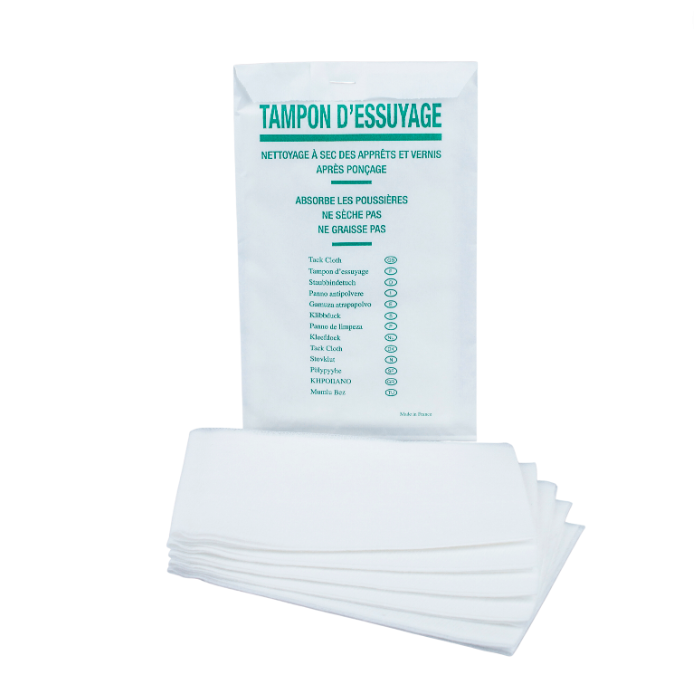
High-efficiency impregnated tack cloth made with an oil/resin complex providing the ideal level of tackiness for efficient removal of dust, lint, and other contaminants. Designed for surface decontamination and cleaning prior to painting, coating, or bonding, ensuring a residue-free, clean surface finish.

Get a Quote

Additional information

Supplier

IPS-Solutions

Size(s)

650 x 750 mm

SKU(s)

IPS1002

MSDS-TP65-EN
TDS-IPS-TackRag-TP65

Please log in or register to download the datasheets.

IPS™ TackRag TP65

Specifications

CompositionImpregnated textile with oil/resin complex
Physical FormViscous, slightly coloured fabric
Density0.95 g/cm³
Water SolubilityNegligible
Flash Point> 100 °C (DIN ISO 2592)
Boiling RangeNot determined
Viscosity< 20.5 mm²/s at 40 °C

Key Material Properties

Tackified cotton substrate ensures optimal dust capture while maintaining surface safety. No transfer or residue on cleaned surfaces. Low odour, non-corrosive, and safe for manual or automated applications.

  • Oil/Resin Complex
  • Residue-Free
  • Surface Decontamination
  • High Tack

Applications

  • Elimination of foreign particles before coating or painting
  • Surface preparation before bonding or laminating
  • Decontamination of automotive and aerospace components
  • Wood, metal, and composite finishing operations
  • Industrial and OEM production lines

Handling & Safety

  • Use protective gloves and clothing when handling
  • Avoid prolonged skin contact or inhalation of vapours
  • Store in a cool, dry, ventilated area away from heat sources
  • Not classified as hazardous; combustible dust may form during handling
  • Ensure proper disposal of used cloths according to local regulations

Benefits

  • Efficient removal of contaminants and particulates
  • Residue-free finish ideal for painting and coating
  • Improves paint adhesion and surface quality
  • Stable and safe formulation compliant with REACH Regulation (EC) 1907/2006
  • Prolonged usability with minimal lint generation